






BCAAs or EAAs: which should you choose (and do you really need to take them)?
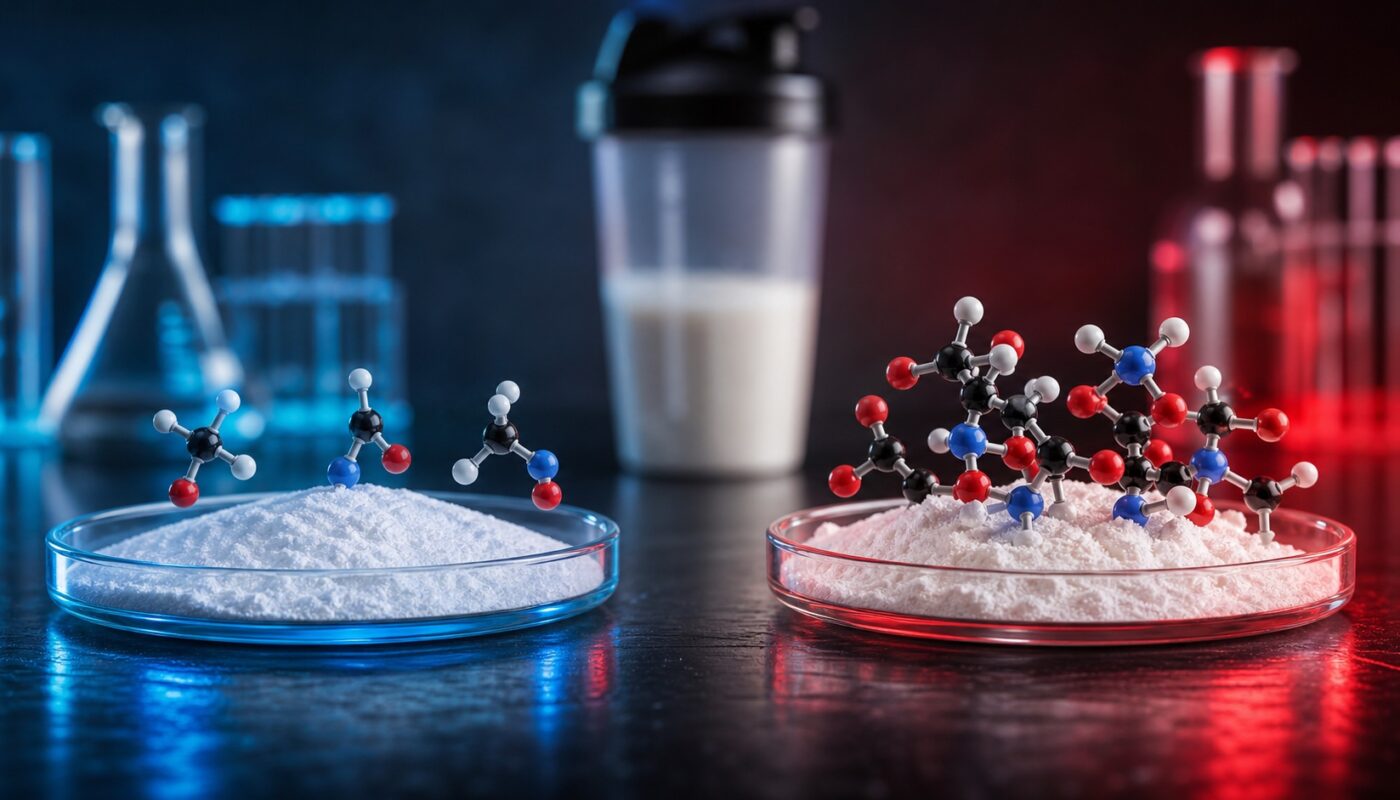
BCAAs on one side, EAAs on the other: two neighbouring shelves, similar claims, and yet a difference that changes everything.
The difference in a nutshell
BCAAs provide 3 essential amino acids (leucine, isoleucine, valine). EAAs provide all 9 essential amino acids — including the 3 BCAAs. Building muscle requires all 9: providing just 3 is like delivering three bricks out of the nine needed.
What the research has established
For years, BCAAs were marketed as triggers for protein synthesis, based on the role of leucine. More recent research has clarified the picture: leucine triggers the signal, but without the other essential amino acids, muscle building grinds to a halt due to a lack of building materials. EAAs produce a significantly better response.
If your protein intake is already sufficient (1.4 to 2 g per kilo per day), neither BCAAs nor EAAs will add much value. They fill a gap; they do not simply add to your existing intake.
So, who needs what?
- Anyone with an adequate protein intake: neither. Prioritise complete protein.
- Training on an empty stomach: EAAs make sense to limit catabolism.
- Long sessions in hot weather: an EAA formula with electrolytes covers both amino acid intake and hydration.
- Struggling to meet your protein intake: whey protein works out cheaper per gram of amino acids than a tub of EAAs.
What about glutamine?
It is a non-essential amino acid: the body produces it naturally. In healthy, well-nourished athletes, there is little evidence regarding its impact on performance or recovery. Its benefits are mainly studied in clinical contexts.
This information is provided for guidance only and is not a substitute for the advice of a healthcare professional. If you have a medical condition, are undergoing treatment, are pregnant or breastfeeding, consult your doctor before taking any supplements.