



Creatine monohydrate: what the science really says
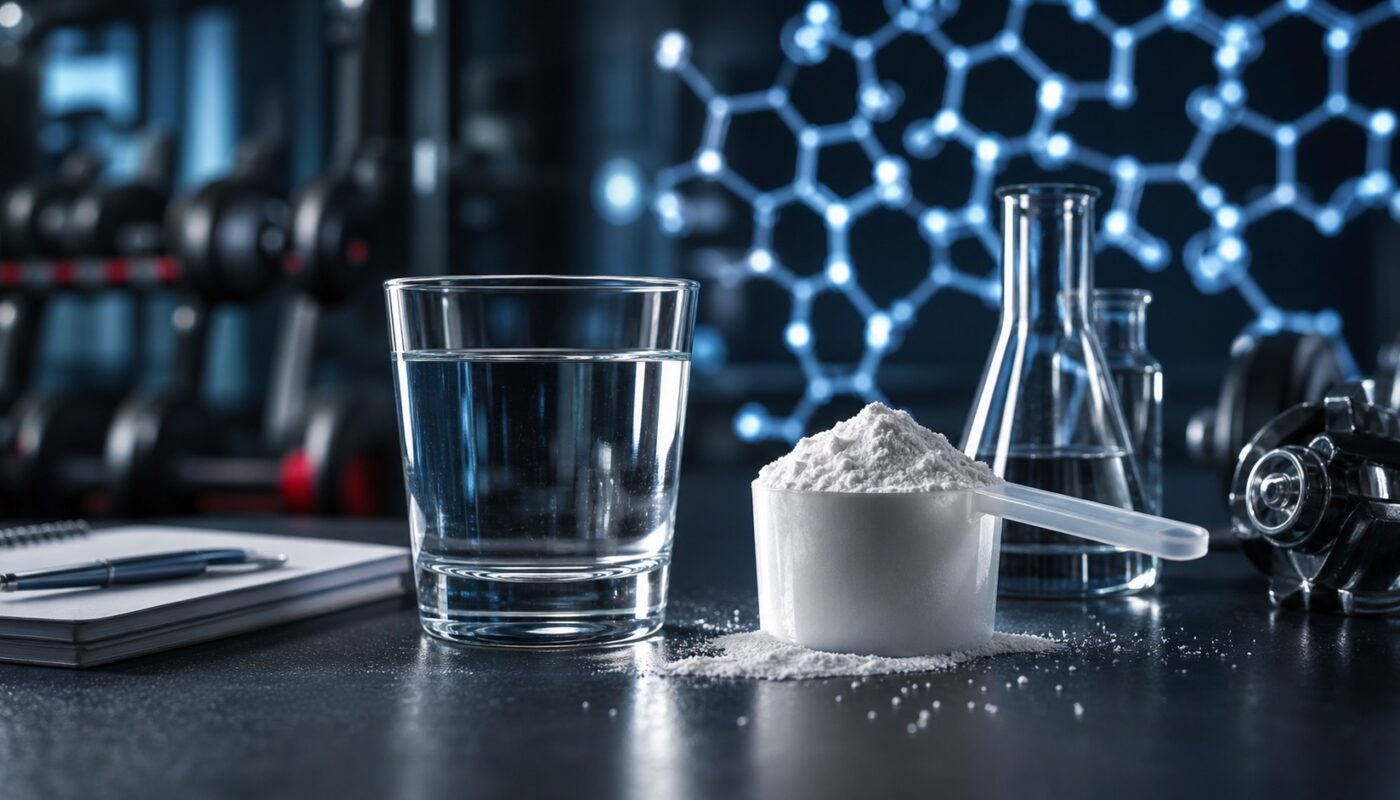
Creatine is one of the most widely studied supplements in the world, with several hundred published clinical trials. It is also one of the supplements most subject to misconceptions. Let’s take a look at what the evidence actually shows.
How creatine works
Your body naturally produces creatine, around 95 per cent of which is stored in the muscles as phosphocreatine. This reserve fuels the rapid resynthesis of ATP, the molecule that provides energy during short, intense bursts of exercise: sprints, heavy sets, changes of pace.
Supplementation increases these reserves by around 20 to 40 per cent. The result isn’t an immediate gain in strength, but the ability to perform a few more repetitions or generate a few more watts during each session — a cumulative effect that builds up over several weeks.
Which form should you choose?
Monohydrate remains the gold standard: it is the most widely studied, best documented and least expensive form. Alternative forms (HCl, ethyl ester, Kre-Alkalyn) are sold at a higher price without having demonstrated any superiority over monohydrate in direct comparisons.
The Creapure® label denotes a monohydrate produced in Germany using a process that guarantees high purity. It is a mark of quality, not a chemically different form.
Dosage: is a loading phase necessary?
Two protocols lead to the same end result:
- With a loading phase: 20 g per day, divided into 4 doses, for 5 to 7 days, followed by 3 to 5 g per day. Saturation is reached within a week.
- Without a loading phase: 3 to 5 g per day from the first day. Saturation is reached in 3 to 4 weeks, with less digestive discomfort.
The loading phase offers no additional long-term benefit: it simply speeds up the onset of effects. For the majority of users, the standard daily dose is more than sufficient.
Does the time of day you take it matter?
Not really. Creatine works by saturating muscle stores, not by causing a one-off spike: what matters is taking it regularly every day, including on rest days. Take it at a time when you’re least likely to forget.
The most persistent myths
‘Creatine makes you bloated’
It slightly increases intramuscular water retention, which can result in a weight gain of 1 to 2 kg over the first few weeks. This water is stored in the muscle, not under the skin: the ‘bloated’ or ‘puffy’ appearance is unfounded.
‘It damages the kidneys’
In people with healthy kidneys, long-term studies have shown no evidence of impaired kidney function at standard doses. However, in cases of known kidney failure or risk factors, medical advice is essential before taking it.
“You need to take it in cycles”
There is no evidence to support periodically stopping the supplement. Natural production usually resumes once you stop taking it.
Who is it suitable for?
The benefits are most pronounced during explosive and repeated exertion: weight training, team sports, sprints. For long-distance endurance, the benefits are minimal. It should also be noted that around 20–30 per cent of people show little response to supplementation, generally because their reserves are already close to maximum — often those who consume large amounts of red meat and fish.
Not recommended without medical advice in cases of kidney disease, for pregnant or breastfeeding women, or for minors.