


Whey, isolate or casein: which protein should you choose depending on your goal?
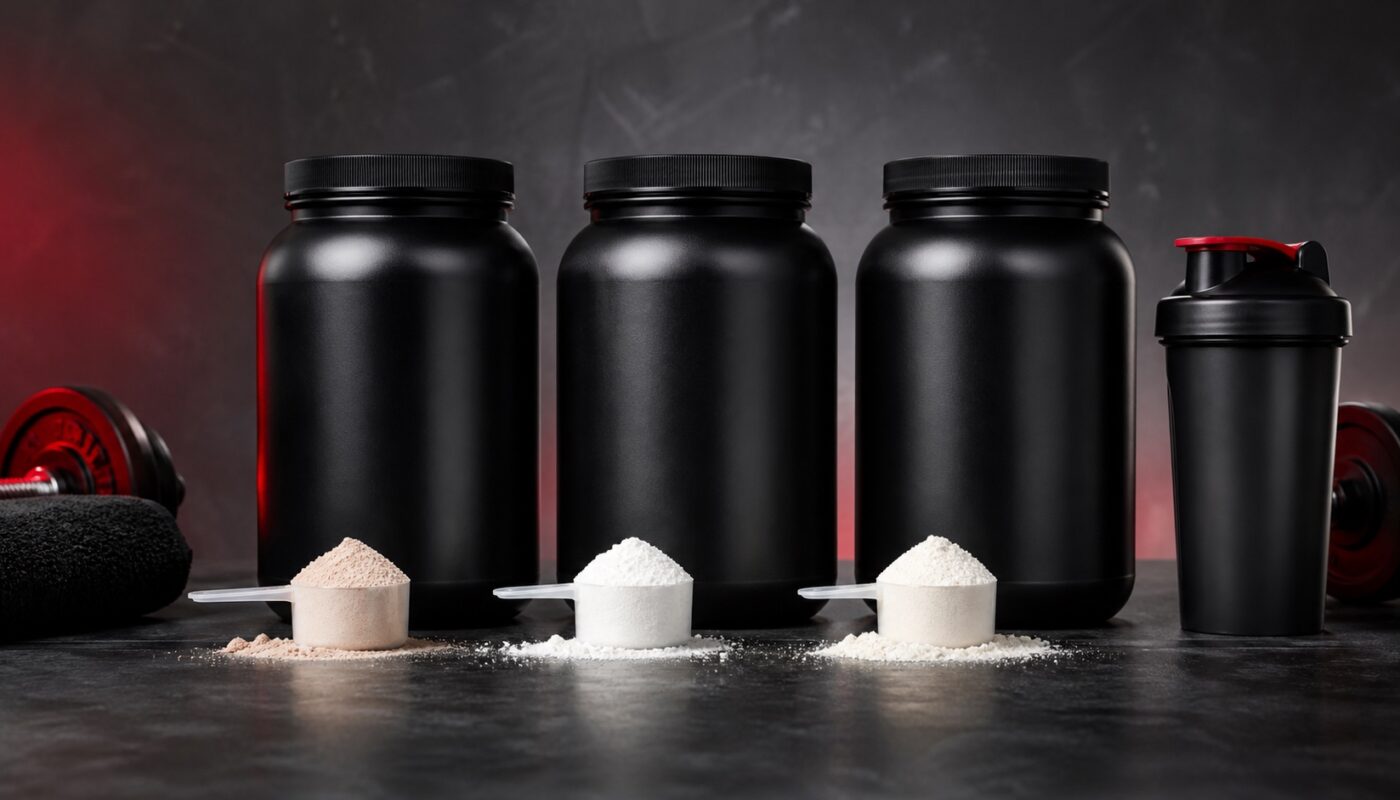
Whey concentrate, isolate, casein, plant-based protein: when standing in front of a shelf full of protein powders, the difference between the products isn’t always obvious. Yet it comes down to just a few things: the rate of absorption, the actual protein content and how well they are tolerated by the digestive system. Here’s how to choose the right one.
How much protein do you actually need?
For a sedentary person, the recommended intake is around 0.8 g of protein per kilo of body weight per day. If you’re doing regular exercise with the aim of building muscle or maintaining muscle mass, the recommendations from sports nutrition organisations tend to be between 1.4 and 2 g per kilo per day.
In practical terms, for a 75 kg person who trains four times a week, this amounts to around 105 to 150 g of protein per day. This can be achieved through diet alone — eggs, meat, fish, dairy products, pulses — but a protein powder provides a simple way to top up your intake on days when you lack an appetite or are short of time.
A supplement is not a substitute for a balanced diet: it fills a gap. If your dietary intake already meets your needs, a protein powder will not provide any additional benefit.
Whey concentrate: the best value for money
Whey concentrate generally contains between 70 and 80 per cent protein, with the remainder consisting of lactose and residual fats. It is digested quickly, making it a logical choice around training sessions, and remains the most affordable option per gram of protein.
It’s the go-to choice if you’re just starting out, can tolerate dairy products well and are looking, above all, for good value for money.
Isolate: purer, better tolerated
Isolate undergoes additional filtration, which raises the protein content to 85–90 per cent and significantly reduces lactose and fat. There are two situations where this is justified: if you find standard whey difficult to digest, or if you’re in a cutting phase where every calorie counts.
Apart from these two cases, the difference in results compared with whey concentrate is marginal — the price difference, however, is not.
Casein: the long-acting option
Casein coagulates in the stomach and releases its amino acids gradually over several hours. It is not ‘better’ than whey: it simply meets a different need, typically an evening intake or during a long gap between meals.
Plant-based proteins: who are they for?
Pea, rice, hemp or blends: plant-based proteins are suitable for vegans and those who are lactose intolerant. When taken on their own, they have a less complete amino acid profile than whey; blends (particularly pea and rice) largely correct this imbalance.
How to read a label
- Protein content per serving: compare this to the actual weight of the serving, not the percentage stated on the front of the packet.
- Ingredients list: the shorter the better.
- Added sugars: watch out for these in flavoured versions.
- Origin and traceability: opt for established brands that clearly state the source.
In summary
Beginners on a tight budget or with good digestion: whey concentrate. Sensitive digestion or cutting phase: isolate. If you need a slow-release formula: casein. For a vegan diet: plant-based blend. In all cases, the consistency of your daily intake will matter more than the type of powder you choose.
If you have kidney disease, are pregnant, breastfeeding or undergoing medical treatment, seek advice from a healthcare professional before taking any supplements.