


How to read a supplement label: the 5-step method
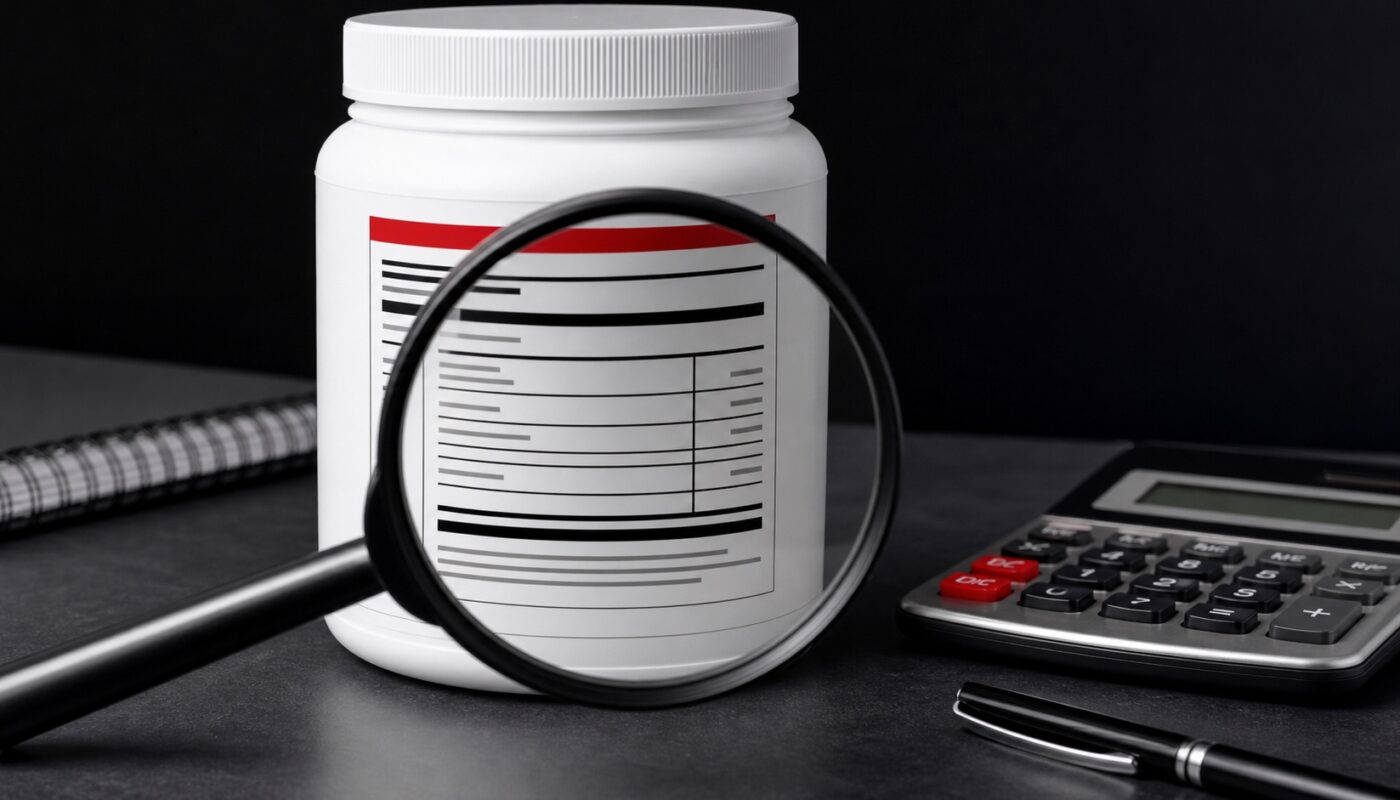
Two products at the same price can vary by as much as double in terms of actual content. Here’s how to compare them in thirty seconds, whether you’re in-store or online.
1. Look at the portion size, not the tub
All the values shown relate to a serving size, the weight of which varies from one brand to another. A whey protein that claims 24 g of protein per 30 g of powder (80 per cent) is not comparable to one that claims 24 g per 40 g (60 per cent). Always convert to a percentage.
2. Work out the price per gram of active ingredient
Divide the price by the actual amount of active nutrient, not by the weight of the container. A 2 kg tub containing 80 per cent protein contains 1.6 kg of protein; a 2 kg tub containing 60 per cent contains only 1.2 kg. At the same price, the difference is 33 per cent.
3. Avoid proprietary blends
A ‘proprietary blend’ lists a total amount without detailing each ingredient. This is the most common way of advertising an impressive list whilst only including token amounts of the expensive components. A reputable brand will specify each quantity.
4. Check the forms, not just the names
- Magnesium: bisglycinate or citrate rather than oxide.
- Zinc: bisglycinate or picolinate rather than oxide.
- Creatine: monohydrate, the most widely studied and least expensive form.
- Collagen: hydrolysed peptides, with vitamin C.
5. The order of ingredients is important
The list is ranked in descending order of quantity. If a sugar or bulking agent appears among the first three, the star ingredient is likely present in only a small proportion.
Any doubts about a label? Send us a message on WhatsApp with a photo of the product: we’ll help you make sense of it.
This information is provided for guidance only and is not a substitute for the advice of a healthcare professional. If you have a medical condition, are undergoing treatment, are pregnant or breastfeeding, please seek advice from your doctor before taking any supplements.